
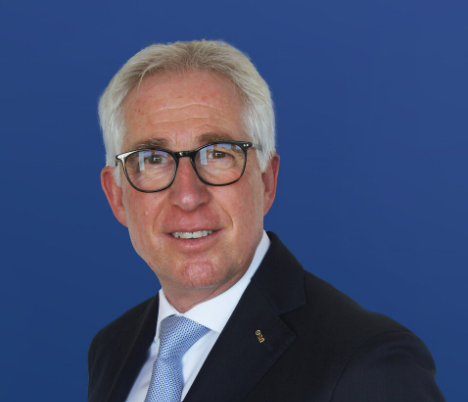
Francisco-Javier Benedicto Ruiz
Director of Navigation, ESA
Francisco-Javier Benedicto Ruiz has accomplished an international career in space, with over 40 years’ experience at ESA, universities and Spanish industry and Japan’s international telecom operator KDD. Mr Benedicto Ruiz started his career as radio frequency engineer working for Mier Comunicaciones and for the Polytechnic University of Catalonia in the early 1980s. He joined ESA as satellite communications engineer in the Technical Directorate at ESTEC, the Netherlands, in 1985, and worked in Japan as a satellite communications engineer for international satcom operator KDD.
He then became Head of Mobile Satellite Services in ESA’s Directorate of Telecommunications at ESTEC in 1993 and later initiated the EGNOS project, which he managed in close collaboration with French space agency CNES. Since 2000, he has been leading at ESA the design, development, deployment and initial operations of Europe’s Galileo global satellite navigation system. This included the end-to-end system design, deployment of two experimental satellites (GIOVE A/B) and up to 30 operational satellites in medium Earth orbit, and deployment of ground segment with over 20 operational sites, control and security monitoring centres in Europe and ground stations distributed all over the world.
He has over 100 publications in technical journals and conferences, holds several international ESA patents and has been recipient of several honours and awards.
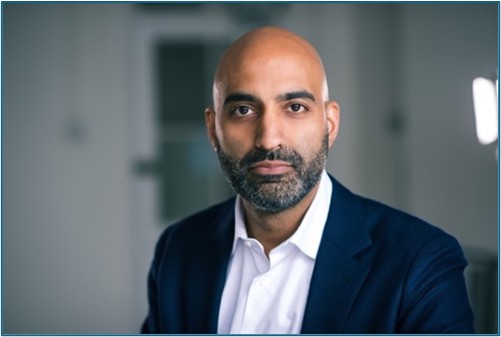
Deeph Chana
Imperial Business School, Imperial College London
Deeph Chana is a researcher, technologist, and innovation strategist specialising in dual-use technologies at the intersection of space, security, and advanced engineering systems. With over two decades of leadership across academia, government, industry, and international security institutions, his work focuses on how frontier technologies transition from research to operational capability at pace—particularly in domains critical to resilience and positioning, navigation, and timing (PNT).
He is the founding architect of NATO’s Defence Innovation Accelerator for the North Atlantic (DIANA) and the NATO Innovation Fund (NIF) and served as DIANA’s inaugural Managing Director. In this role, he built the world’s first multi-sovereign deep-tech accelerator ecosystem, explicitly designed to advance dual-use and space-based technologies and strengthen innovation pipelines across 32 nations representing 1Bn citizens.
Professor Chana is currently based at Imperial College Business School, where he works on applied machine learning, innovation systems, and deep-tech commercialisation. He is also an Advisor to Hiro Capital, supporting investment strategy across frontier technologies including AI, space-adjacent systems, and next-generation infrastructure.
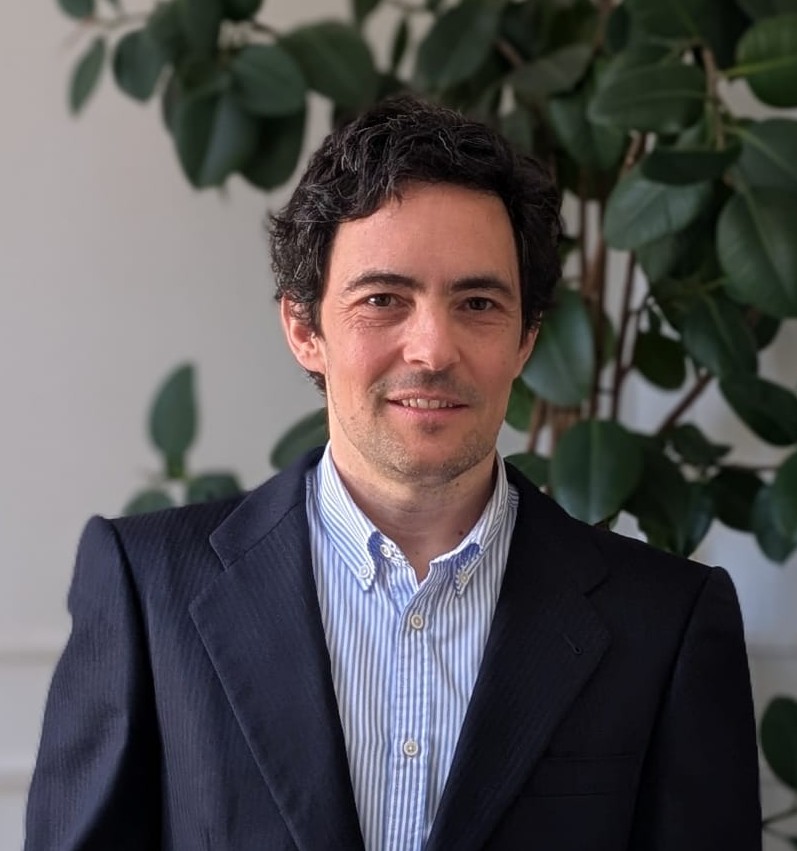
Ignacio Fernández Hernández
Galileo High Accuracy and Authentication Manager, European Commission, DG DEFIS
Ignacio Fernández Hernández is a civil servant at the European Commission's DG DEFIS, where he has led the design and development of Galileo's high accuracy and authentication services. He also chairs several international groups on PNT resilience, Precise Point Positioning and authentication. Previously, he worked for the European aerospace industry as a systems engineer and EGNOS test manager, among other roles. He holds an engineering degree from ICAI, Madrid, an MBA from LBS, London, and a PhD in electronic systems from Aalborg University. He has been a visiting scholar at Stanford University and is currently a visiting professor at KU Leuven, teaching satellite navigation and communications. He is the co-author of over 150 publications, including a book and several patents. His technical interests include end-to-end design of navigation systems and services, GNSS receivers, cryptography and high-accuracy positioning.

Aarti Holla-Maini
Director, United Nations Office for Outer Space Affairs
Aarti Holla-Maini is the Director of the UN Office for Outer Space Affairs (UNOOSA), having taken up post on 18th September 2023 following her appointment by United Nations Secretary-General António Guterres. Ms. Holla-Maini brings over 25 years of experience in the space and satellite sector, working predominantly with international organizations and regulators. Prior to the United Nations, she held the post of Secretary-General of the Global Satellite Operators Association.
Ms. Holla-Maini is a recognized leader with a strong track record in forging public-private and cross-sector partnerships; high-level advocacy at the international level; strategic communication and managing diverse stakeholders. Under her leadership, Ms. Holla-Maini expanded the association from being a regional organization to a global one representing commercial satellite operators around the world.
She was one of the chief architects of the Crisis Connectivity Charter established in 2015 for emergency telecommunications via satellite with the UN World Food Programme’s Emergency Telecommunications Cluster and has, on multiple occasions, secured recognition and policy support for space technologies to play their rightful role in connecting the unconnected, in Europe, Africa and beyond. Ms. Holla-Maini’s experience has included service as a member of the World Economic Forum's Global Future Council on Space; member of the Advisory Group of the Space Sustainability Rating managed by eSpace at EPFL Space Center; member of the Advisory Board of the Satellite Industry Association of India; Senior Space Policy Advisor to Forum Europe and an Expert Advisor on Space Traffic Management for European Union studies 2021-2023.
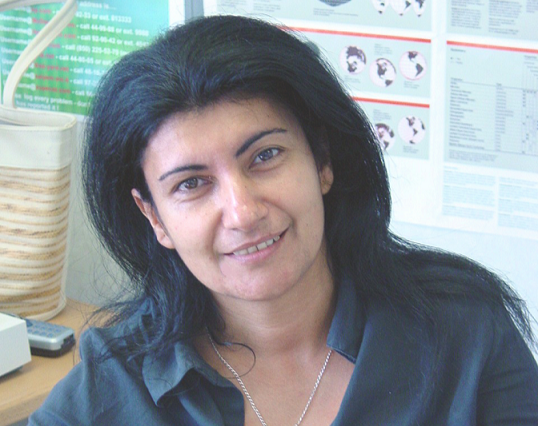
Sharafat Gadimova
Executive Secretariat of the International Committee on Global Navigation Satellite Systems (ICG), United Nations Office for Outer Space Affairs (UNOOSA)
Sharafat Gadimova has been with the United Nations Office for Outer Space Affairs since 2004. Ms. Gadimova leads the United Nations Programme on Space Applications’ activities on global navigation satellite systems (GNSS) and space weather. She coordinates the work of the International Committee on global navigation satellite systems (ICG) and its Providers’ Forum. She is a chair of the ICG Working Group on Capacity Building and Information Dissemination, and she spearheaded the development of education curriculum in GNSS for the United Nations-affiliated Regional Centres for Space Science and Technology Education. Ms. Gadimova graduated from the Azerbaijan State Oil and Industry University in Baku and holds a Master of Engineering in Electrical Engineering and a Master of Science in Remote Sensing and Geographic Information System.
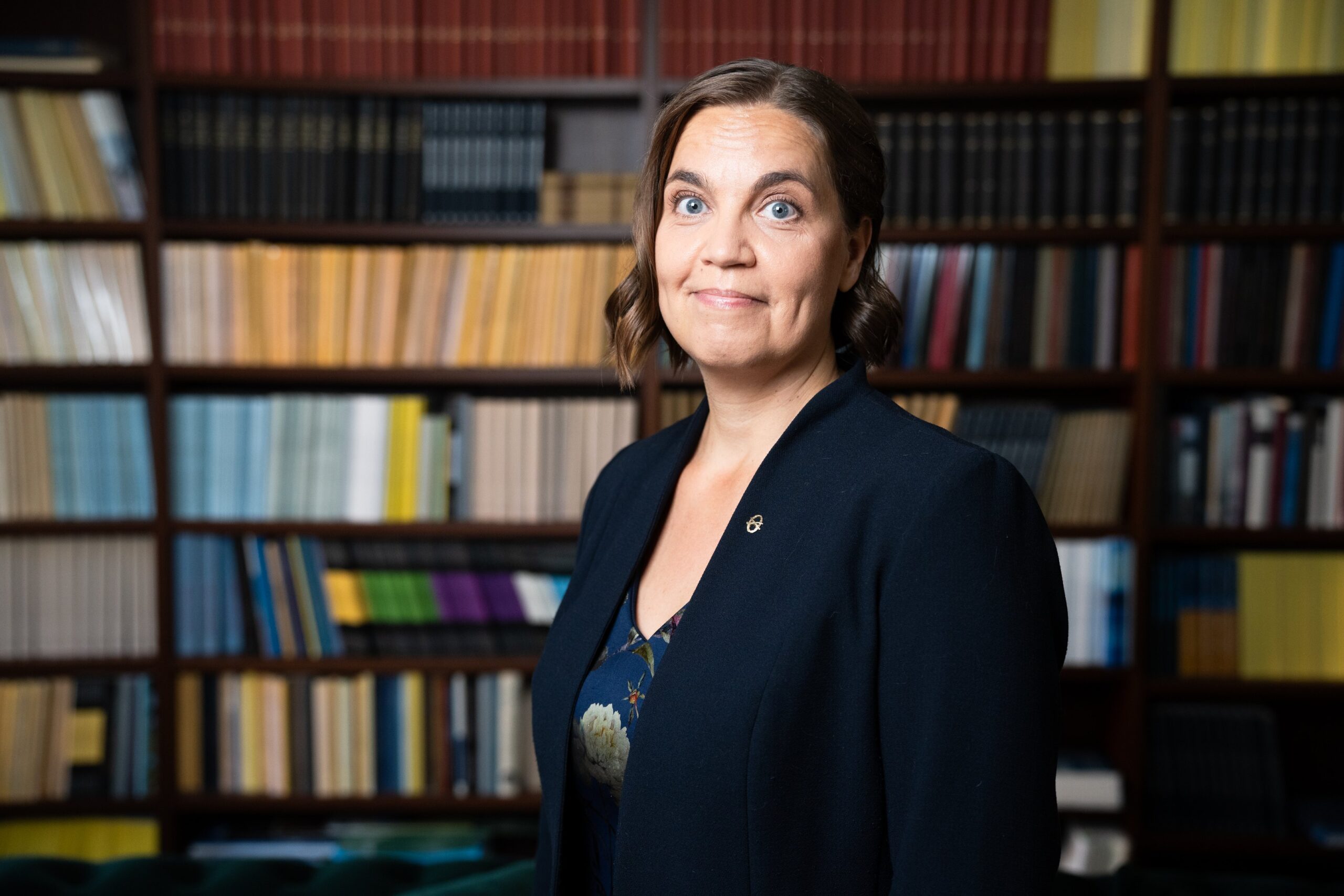
Heidi Kuusniemi
Professor, Wireless Systems Tampere University, Finland
Heidi Kuusniemi is a Professor of Wireless Systems at Tampere University, Finland, holding a joint professorship with the Finnish Geospatial Research Institute of the National Land Survey of Finland. Her research focuses on resilient positioning, navigation and timing (PNT) systems, including satellite navigation interference detection and mitigation as well as reliable multi-system and multi-sensor navigation. Her work bridges the domains of geospatial technology, wireless systems and cybersecurity, with the goal of ensuring trustworthy positioning and situational awareness from space to Earth. Prof. Kuusniemi has led numerous national and international research and development projects on localization resilience, sensor fusion and the space economy. She is President of the Nordic Institute of Navigation and a member of the Finnish Academy of Science and Letters as well as the Finnish Academy of Technical Sciences, and was named Professor of the Year 2025 by the Professors’ Union of Finland.
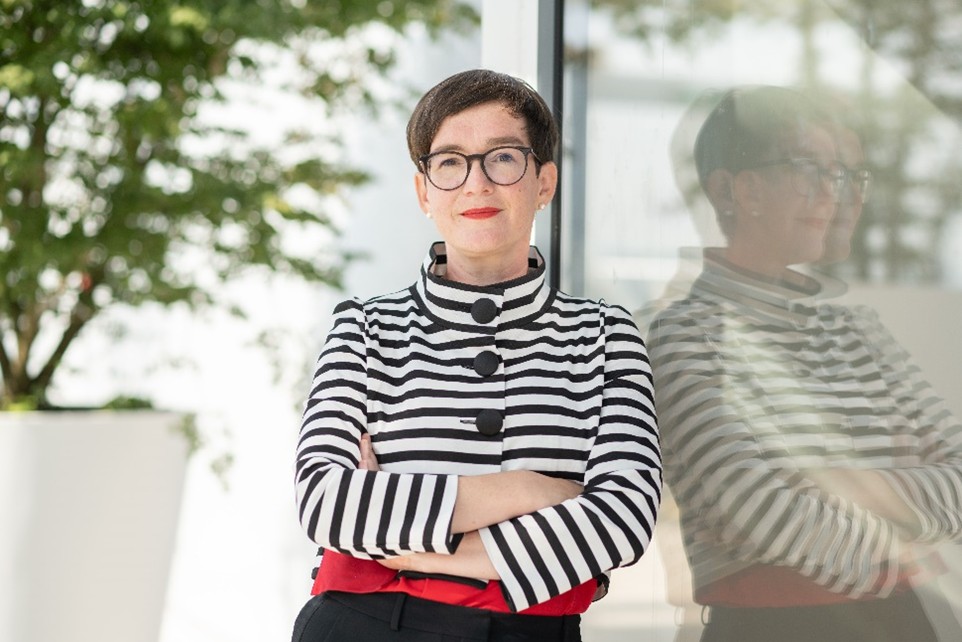
Henriette Spyra
Director General, Austrian Federal Ministry for Innovation, Mobility and Infrastructure
Henriette Spyra has been serving as Director General at the Austrian Federal Ministry for Innovation, Mobility and Infrastructure since 2021 following a two-year-term as Director Science & Innovation at the Austrian Environment Agency. As an innovation and mobility expert she looks back at a 15 year career in various public sector positions as well as research institutions. She is member of the supervisory board at AIT Austrian Institute of Technology as well as SAL Silicon Austria Labs. She also serves as co-president of the Climate & Energy Fund. A stubborn optimist Ms. Spyra enjoys bridging the worlds of policy, technology, sustainability and innovation. Originally from East Berlin, Ms. Spyra believes in falling walls. She holds degrees from the University of Oxford as well as the School of Advanced International Studies at Johns Hopkins University.